

What is a Linear Guide? A Foundational Definition
In the world of automated machinery, precise, controlled movement is the foundation of quality and speed. The component responsible for making this motion possible is the Linear Guide (also known as a linear guideway, linear rail, or linear slide).
A Linear Guide is a highly engineered mechanical system designed to support a load and facilitate smooth, low-friction, straight-line movement along a defined path.
They are indispensable in any application where accuracy, rigidity, and the ability to handle significant loads are critical—from robotic arms to high-speed CNC machines.
The Core Components
A typical Linear Guide assembly consists of three main, precision-machined elements:
Rail (Guideway): The stationary, foundational component. This hardened steel track is precision-ground and contains specially shaped raceways (grooves) that dictate the direction of travel and are crucial for the system’s accuracy.
Carriage (Block/Slider): The moving element that mounts onto the rail. The carriage supports the payload (like a machine tool head or gantry) and contains the recirculating mechanism for the rolling elements.
Rolling Elements (Balls or Rollers): The spheres (balls) or cylinders (rollers) that fit between the carriage and the rail's raceways. Their purpose is to convert high-friction sliding contact into low-friction rolling contact, enabling smooth motion.
The Three Essential Functions of a Linear Guide
A linear guide is not merely a piece of hardware; it is a fundamental machine element that provides three core functional benefits that underpin modern automation:
1. Load Bearing & Support
The profiled raceway design allows the rolling elements to achieve a large, optimized contact area (surface contact rather than point contact). This structure efficiently distributes heavy and uneven loads—including radial (vertical), reverse radial, and lateral (horizontal) forces—over the length of the carriage, significantly increasing the load capacity compared to simpler systems.
2. Friction Reduction & Efficiency
The most defining feature of a modern linear guide is the use of recirculating rolling elements. By replacing sliding friction with rolling friction, the coefficient of friction drops drastically (often to 0.003 - 0.005). This low resistance means:
Less energy is required to move the load.
The system generates less heat, minimizing thermal deformation.
Higher operational speeds are achievable with less wear.
3. Guiding and Precision (High Rigidity)
The precise fit between the rolling elements and the raceways (often controlled by preload) eliminates internal clearance. This rigidity is crucial for:
Positional Accuracy: Ensuring the machine tool reaches the exact commanded location.
Repeatability: Guaranteeing the machine returns to the same position, time after time.
Minimal Deflection: The guide resists bending or warping when external forces (like cutting forces in CNC) are applied, maintaining machining accuracy.
Linear Guides vs. Linear Bearings: When to Upgrade
Engineers often start by considering simple Linear Bushings/Bearings (round rail systems). However, for professional-grade automation, Profiled Rail Linear Guides are the definitive upgrade.
| Feature | Profiled Rail Linear Guide (TOCO Specialty) | Linear Bearing (Bushing/Shaft) |
| Contact Type | Surface contact (multi-point) | Point contact |
| Load Capacity | Very High (Equal load ratings in 4 directions) | Low to Moderate |
| Rigidity & Precision | Excellent. High stiffness due to preloading. | Moderate. Limited rigidity under moment loads. |
| Installation Tolerance | Requires highly precise, flat mounting surfaces. | More forgiving of mounting misalignment. |
| Cost | Higher initial cost. | Lower initial cost. |
The Bottom Line: If your application requires high-speed travel, supports a substantial load, and demands micrometer-level accuracy (e.g., CNC, medical), the Profiled Rail Linear Guide is the only suitable choice.
When Should You Choose a Linear Guide? (Ideal Applications)
Linear guides are not overkill; they are a necessity for systems where performance directly translates to profit and quality.
1. High-Precision Manufacturing (CNC, Machining Centers)
Linear guides are the primary component that determines the machining accuracy of machine tools. Their superior rigidity prevents tool deflection during heavy cuts, ensuring the final part meets tight dimensional tolerances.
2. High-Speed Automation (Robotics, Pick-and-Place)
In assembly lines and robotics, systems must move quickly and stop precisely. Linear guides provide the low-friction path necessary for rapid acceleration/deceleration without excessive wear or heat generation.
3. Specialized Systems (Semiconductor, Medical Imaging)
These fields require controlled, clean, and repeatable motion. Linear guides offer the necessary precision, and specialized models can be designed with features like enhanced sealing or low-outgassing materials for cleanroom environments.
The TOCO Advantage: Precision OEM/ODM Partnership
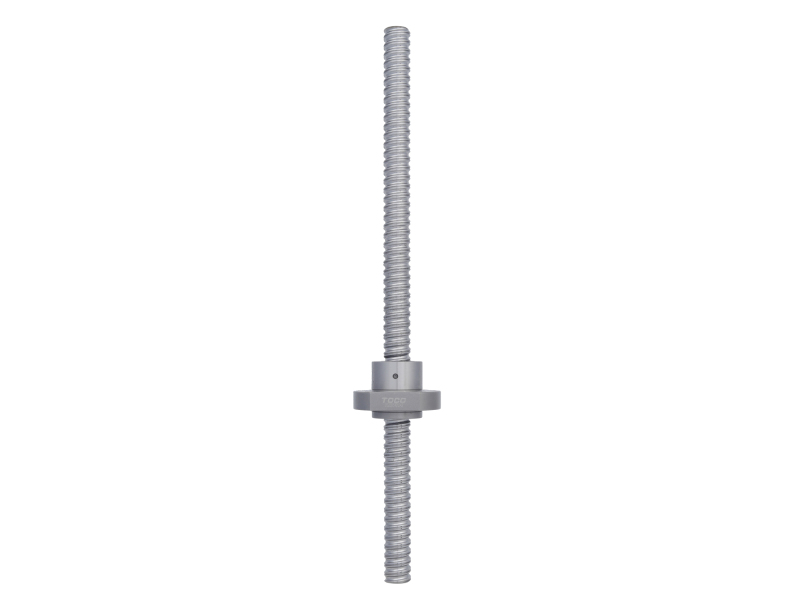
At TOCO, we specialize in manufacturing precision linear components tailored to the specifications of original equipment manufacturers (OEMs) and original design manufacturers (ODMs). Our focus is on delivering high-precision linear guides and ball screws that exceed international standards for:
Precision Grinding: Achieving superior flatness and parallelism for the rail.
Rigidity Optimization: Custom preload calibration to minimize deflection under your specific load conditions.
Material Quality: Using hardened, high-strength steel to ensure maximum longevity and reliability.
By partnering with TOCO, you gain access to an expert supply chain that understands the critical balance between performance, quality, and cost-efficiency for industrial automation.
Conclusion: Precision is Non-Negotiable
Choosing a linear guide is choosing the foundation of your automation system's performance. For applications that require high load capacity, speed, and positional accuracy—such as CNC machines and industrial robotics—the Profiled Rail Linear Guide is an indispensable investment.

 English
 German
 French
 Russian
 Spanish
 Japanese
 Korean
 Khmer
 Portuguese
 Ukrainian
 Arabic
 Italian
 Afrikaans
 Albanian
 Armenian
 Azerbaijani
 Basque
 Belarusian
 Bulgarian
 Catalan
 Croatian
 Czech
 Danish
 Dutch
 Estonian
 Filipino
 Finnish
 Galician
 Georgian
 Greek
 Haitian Creole
 Hebrew
 Hindi
 Hungarian
 Icelandic
 Indonesian
 Irish
 Latvian
 Lithuanian
 Macedonian
 Malay
 Maltese
 Norwegian
 Persian
 Polish
 Romanian
 Serbian
 Slovak
 Slovenian
 Swahili
 Swedish
 Thai
 Turkish
 Urdu
 Vietnamese
 Welsh
 Yiddish

